



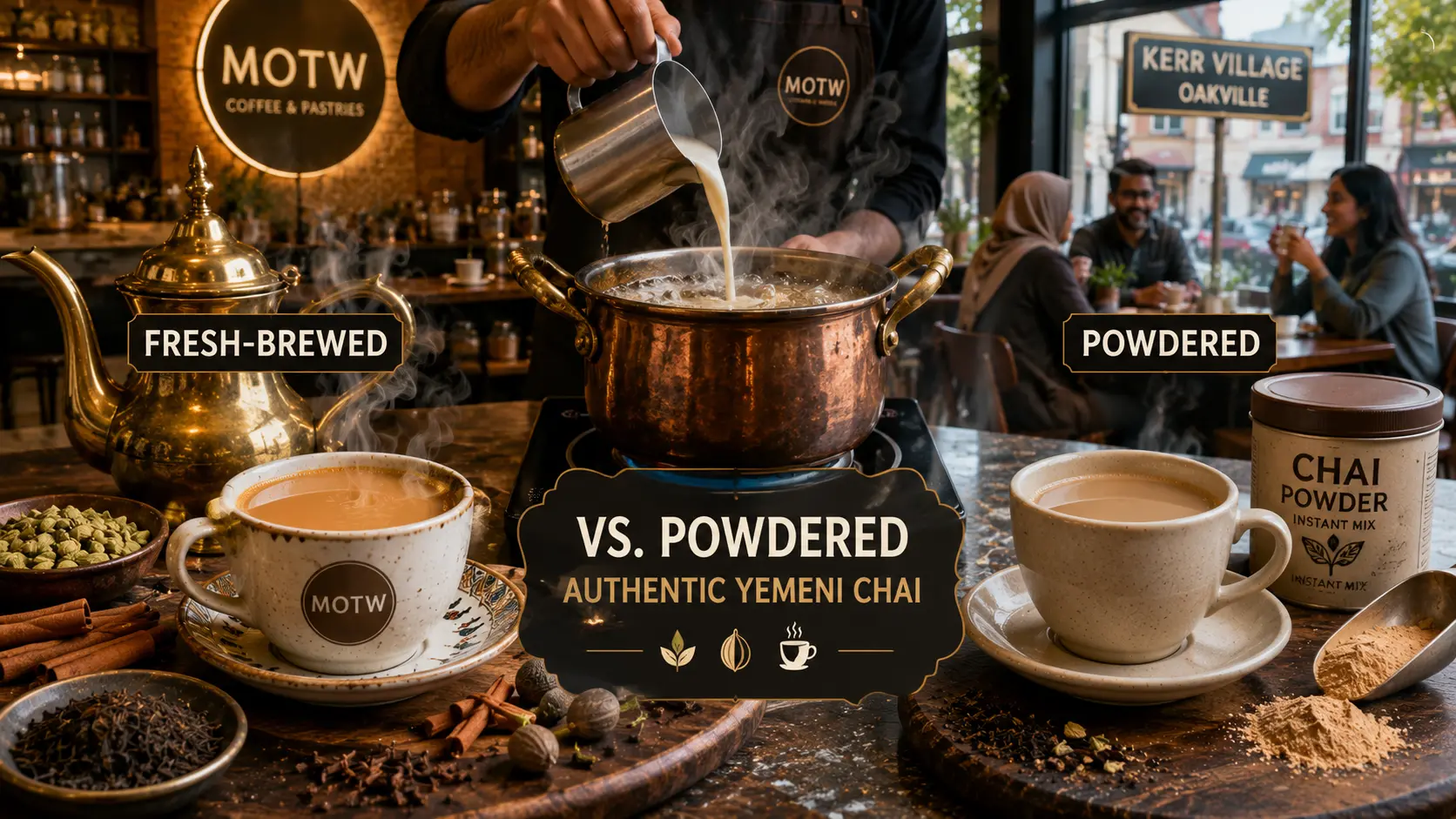
Fresh-Brewed vs. Powdered
What Authentic Yemeni Tea Should Taste Like
Authentic Yemeni Chai, also known as Adeni Tea, is a slow-simmered blend of black tea, whole cardamom, cinnamon, and cloves finished with evaporated milk, a world apart from the sugar-heavy powdered mixes many cafes pour instead.
Not every cup of chai in the GTA is made the same way, even when the menu says the same thing. Behind the counter, a cafe is usually doing one of three things: brewing tea from scratch, pouring from a pre-made concentrate, or mixing a powdered base with hot water. All three end up in a cup labeled chai, but only one of them is actually Yemeni Chai the way it has been made for generations.
The Soul of Adeni Chai: Heritage Over Shortcuts
Adeni Chai gets its name from Aden, the historic Yemeni port city where it developed along ancient maritime spice routes. In Yemeni culture, tea sits at the center of hospitality, and that heritage relies on slow, whole-spice brewing rather than a shortcut.
How Yemeni Chai Differs From Indian Masala Chai
The most common question is how Yemeni Chai actually differs from the Indian masala chai most people already know. Indian masala chai leans on fresh ginger and black pepper for a sharp, warming kick, brewed with whole milk.
Yemeni Chai skips the ginger and pepper entirely, building its flavor instead around green cardamom, cinnamon, cloves, and nutmeg, and using evaporated milk rather than fresh whole milk for a thicker, caramelized body. The result is warm and aromatic rather than spicy, and naturally sweet from the milk itself rather than from added sugar.
Three Ways Cafes Actually Make Chai
Most cafes rely on one of three methods, and the difference shows up the moment the cup is in hand. Fresh-brewed chai starts with real tea leaves and whole spices simmered directly in water. Concentrate is a pre-made liquid base, often brewed once in bulk and diluted later, which saves time but loses some depth with each dilution. Powdered mixes skip brewing altogether, typically built from sugar or corn syrup solids, dried milk powder or non-dairy creamer, and flavor extractives standing in for real spice rather than the spice itself.
| Method | Fresh-Brewed | Concentrate | Powdered Mix |
|---|---|---|---|
| Base | Whole spices, real tea leaves | Pre-brewed liquid, diluted per cup | Sugar or corn syrup solids |
| Milk | Evaporated milk, double-boiled | Often standard milk added later | Dried milk solids or creamer |
| Flavor | Velvety, caramelized, layered spice | Consistent but flattens with dilution | Thin, one-note sweetness |
What the Brewing Process Actually Changes
In authentic brewing, tea leaves and whole spices go through a slow simmer before evaporated milk is added, letting fat molecules bind with tea tannins and spice oils to build a caramelized body. Powdered versions skip that process entirely, which is part of why a standard sixteen ounce cafe chai mix can carry thirty to forty grams of sugar and still taste thin.
How to Spot the Difference Before You Order
The easiest way to tell the difference before ordering is to look at what is actually behind the counter. A cafe brewing fresh chai usually has visible tea leaves, whole spices, and a pot or kettle in use rather than a bottle or powder tin. Asking a simple question, whether the chai is brewed fresh or made from a mix, tends to get a straight answer either way, and that answer says more about the cup than the menu description does.
Why It Matters in Kerr Village
For chai drinkers across Oakville and the wider GTA, that distinction is exactly what separates a forgettable cup from one worth going back for. At MOTW in Kerr Village, the Yemeni Chai is brewed the traditional way every time, using real tea leaves, whole spices, and evaporated milk rather than a shortcut.
No Comments